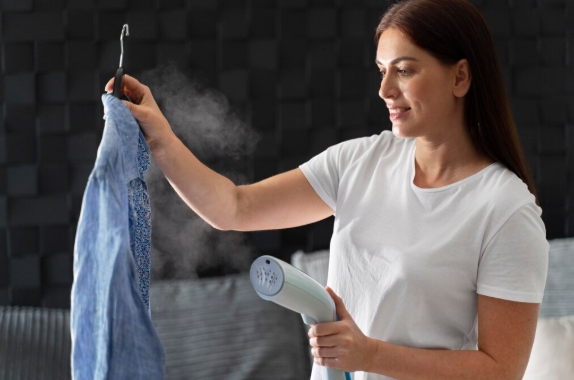
If you’ve ever dealt with stubborn creases, a garment steamer is the quick fix that keeps your clothes looking neat, wrinkle-free. Unlike an iron, it doesn’t press directly onto fabric. Instead, it pushes steam onto hanging garments. That steam helps relax the material structure without the need for an ironing board.
There are so many choices today, and trying to find the best garment steamer can feel confusing. But if you focus in on the most important features, the whole decision gets easier. These are the things you should check and take into account.
Table of Contents
Steam Output
Steam output is probably one of the key things to compare when looking at garment steamers. A dependable flow of steam helps loosen creases fast. This is helpful when dealin with thicker fabrics. Some models even have adjustable steam levels. That way, you can pick a gentler setting for delicate clothing and then jump to a stronger one for heavier materials.
Water Tank Capacity
The water tank capacity is what decides how long you can keep steaming before you have to refill. Smaller handheld units usually come with a smaller water tank. This can keep the device more lightweight. However, this also also shortens the steaming time.
A larger tank is useful when steaming many clothes at once. On the other hand, a bigger capacity can also mean extra weight, so it may be less portable. The tank size to choose is really about how many clothes you usually steam in one go.
Heat Up Time
If a garment steamer warms up quickly it can be a huge help when you need to get things done in less time. It should heat up fast after you hit the power button. But that should not only be the determining factor. When you compare options, don’t just look at how fast it starts. Also, think about steam consistency. A quick start is good, but it is pointless when the steamer can’t keep the output steady.
Handheld vs. Upright
The steamer design should fit your space and the way you plan to use it. Handheld steamers tend to be compact, easier to carry, and simpler to store. They’re especially handy for quick garment steaming. This is best if you have limited storage room at home.
Upright models are usually bulkier, with bigger water tanks. They often have additional features. These are better if you often steam multiple clothes in one go. Make sure that you have enough storage space.
Adjustable Settings
Different fabrics tend to have specific steam intensity requirements. A steamer model with adjustable controls lets you adjust how much steam you release, based on the material and how challenging the creases are. Some more advanced models come with extra operating modes o. This allows you to tailor the intensity based on the garment type.
Design and Overall Build Quality
A garment steamer should feel comfortable to use. If you’re going with a handheld version, check for an ergonomic grip and easy to reach controls. The nozzle should be shaped so that steam spreads consistently. And for upright units, a sturdy base, a durable stand or pole, and a flexible hose can make garment steaming less of a hassle.
Safety Features
Since garment steamers create very hot steam. That’s why the safety features must be checked. One of the most important things to look into is the automatic shutoff feature. Also, a solid base can lower the chances of an upright steamer tipping over. Heat-resistant parts must also be used. Additionally. A secure water tank helps make the operation safer.
Conclusion
The “best” garment steamer isn’t always the one with the most features. Instead, find the one that matches your needs. Make sure that you consider the factors above. All these can help you make the right choice. If you focus on features that match your routine, wrinkle removal feels easier and more convenient. It’s less effort every day.